This week I was asked to select a physical location and use three methods to investigate the chosen site.
I selected my shared bathroom in my Hackney flat, which I share with three other people. This is a site other people use, a site I am myself implicated in, and a site I am relatively new to, having just moved in to this flats a few weeks ago. Hence, because of my unique position as an interrogator with an arms-length relation to the site, being both participant and newcomer, this seemed like a fruitful site to examine.
Because this brief emphasises the production of “new types of knowledge”, I gave some thought to my immediate biases around the site, almost as an expulsion exercise in order for these biases to not readily inform my pursuit of new knowledge production:
My first associations with the geographical location of Hackney, concerned gentrification and histories of deprivation. I was also conscious that the bathroom is used by four gay men in their late twenties and early thirties, myself included, whose lives are broadly adjacent to white-collar work. This brought its own expectations about consumption, grooming and identity. Whilst these contexts matter to the site, I wanted to invite ample room for observations that might complicate these assumptions.
Method 1 – Photography
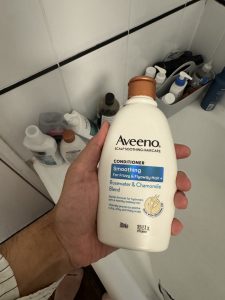
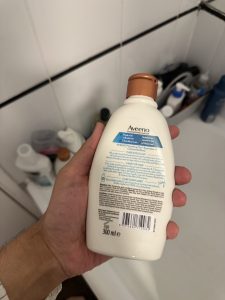
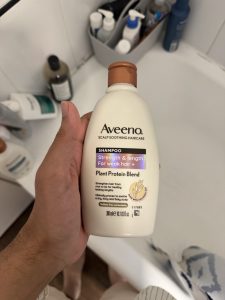
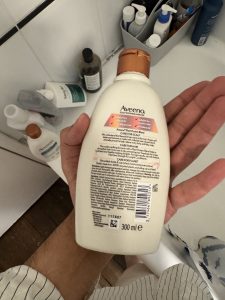
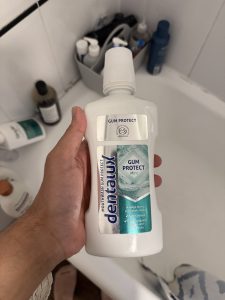
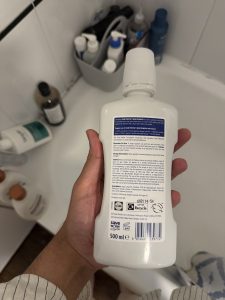
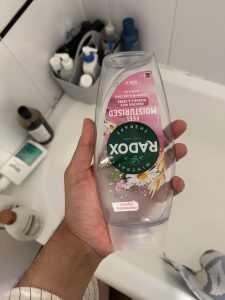
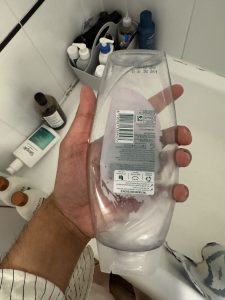
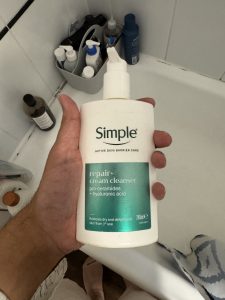
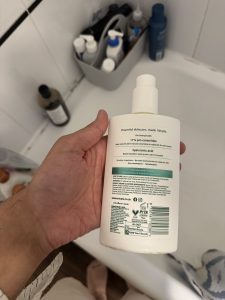

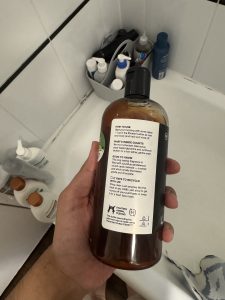
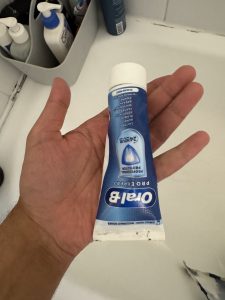
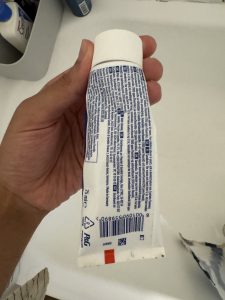
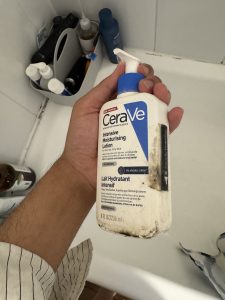
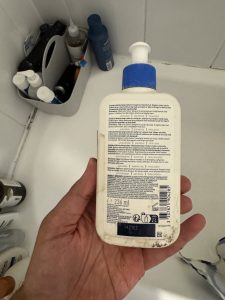
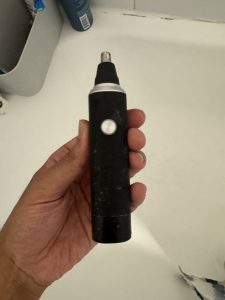
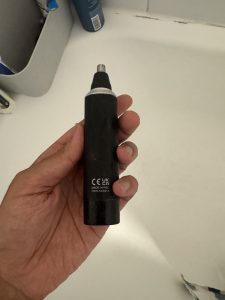
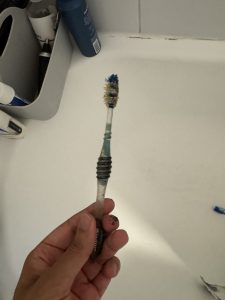
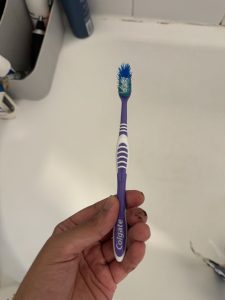
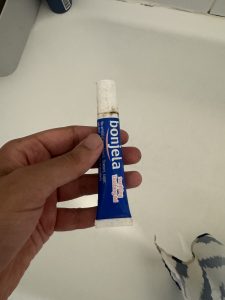
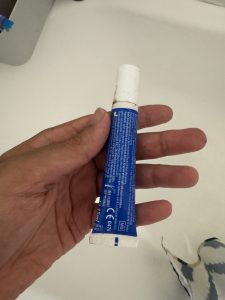
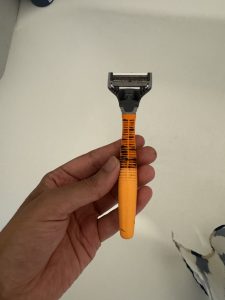
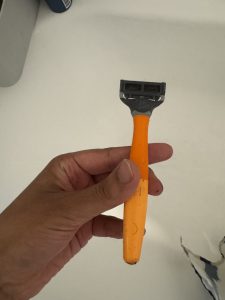
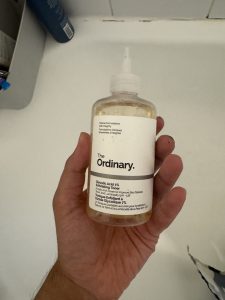
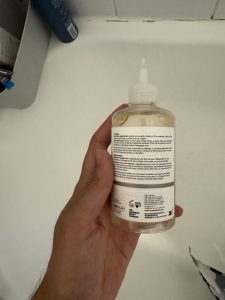
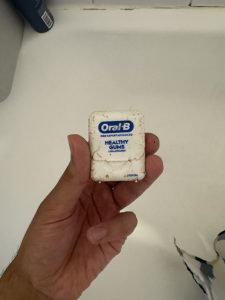
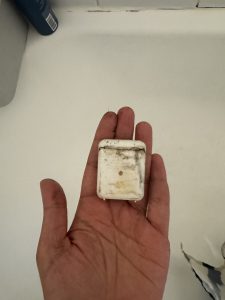
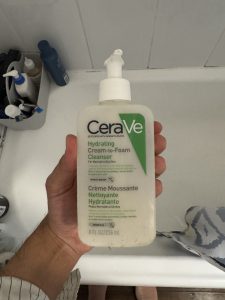
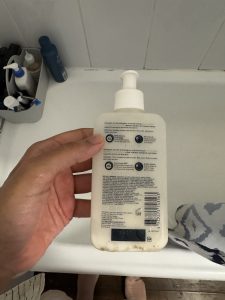
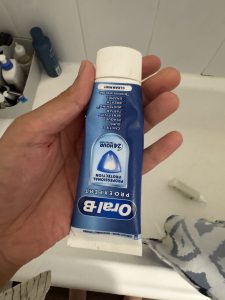
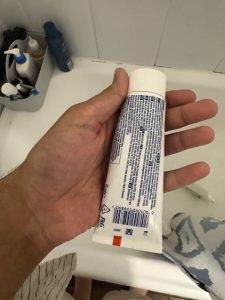
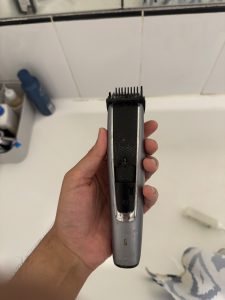
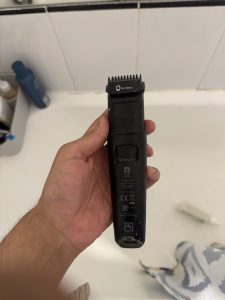
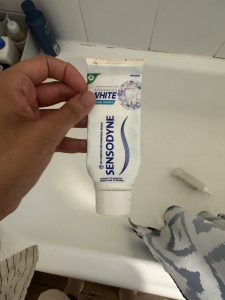
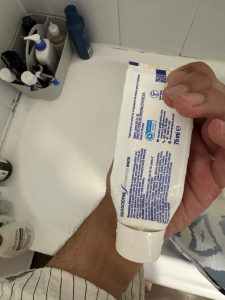
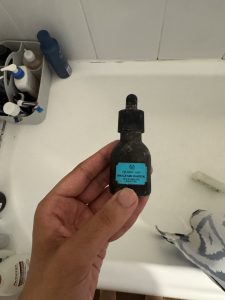
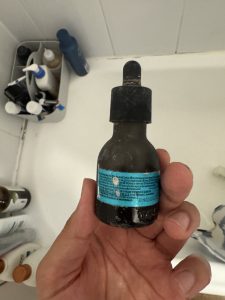
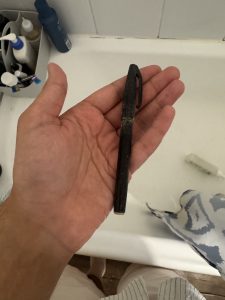
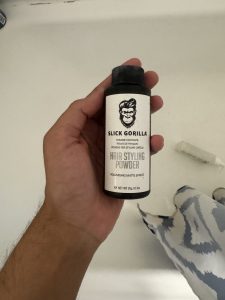
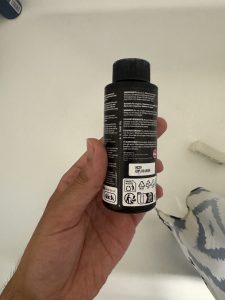
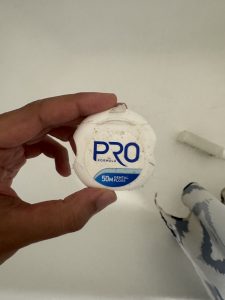

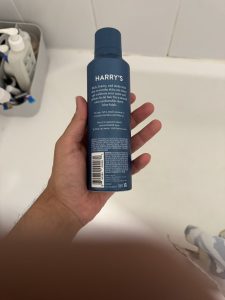
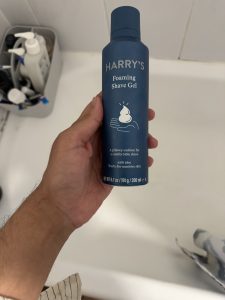

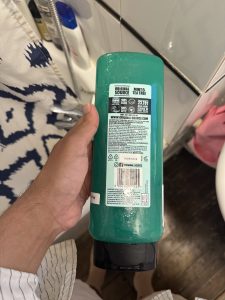
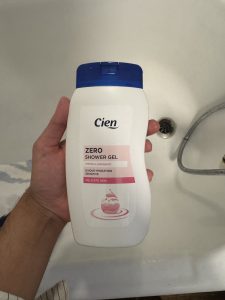
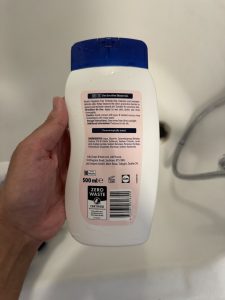
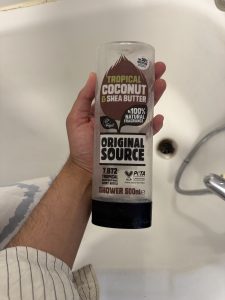
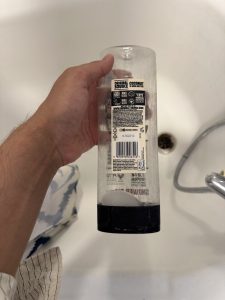
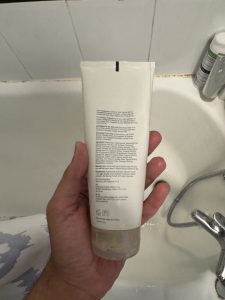
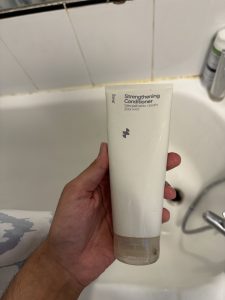
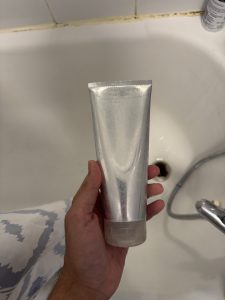
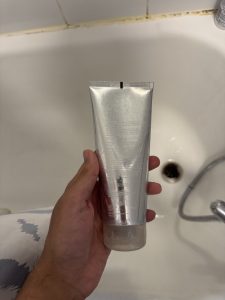
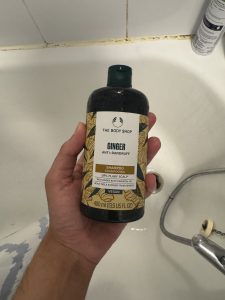
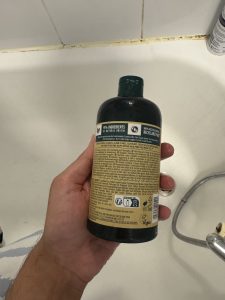
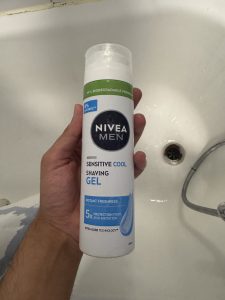
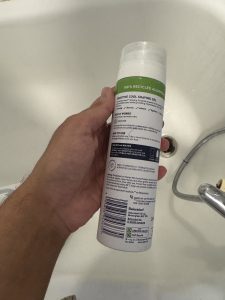
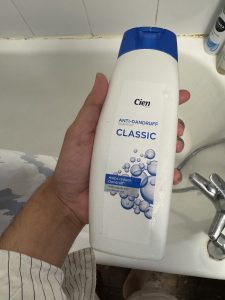
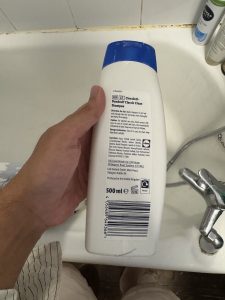
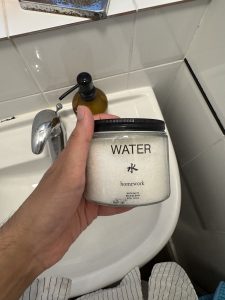
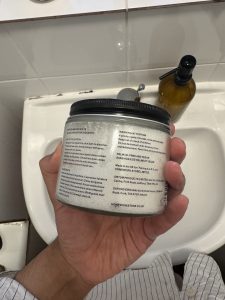
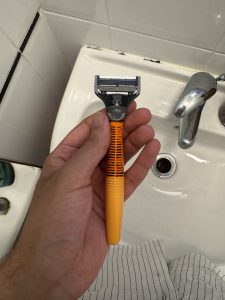
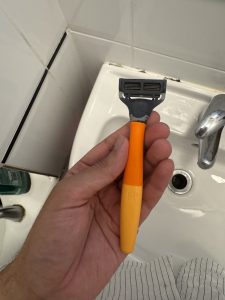
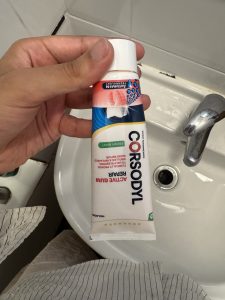
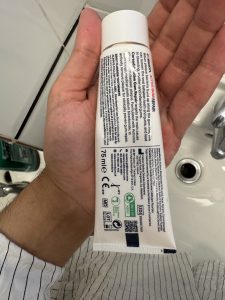
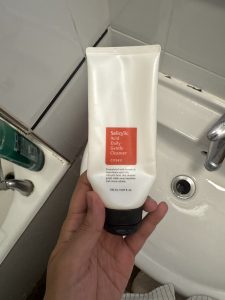
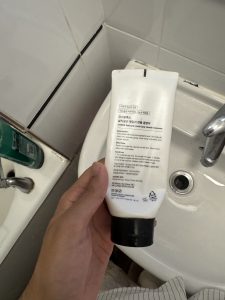
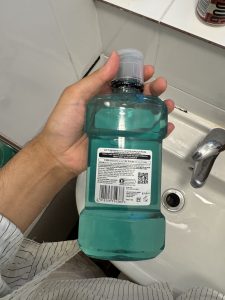

I systematically photographed the front and back of every cosmetic and personal-care product in the bathroom, recording more than forty items. I paid attention to colour, form, typography and text.
My initial questions included:
- What similarities and differences appear across the packaging?
- Which ingredients recur most frequently?
- What cultural logics might these objects reproduce, with regards to consumption habits, grooming rituals or ideas of gay identity?
- What do the products suggest about single-use plastics, waste and excess?
At this stage I was trying to keep my thinking loose, allowing for open ended questions, as to not be swayed by my existing knowledge regarding the site.
I was particularly drawn to photographs of objects that appeared to have been left behind, possibly by previous flatmates.
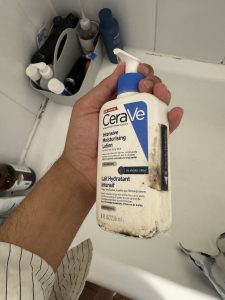
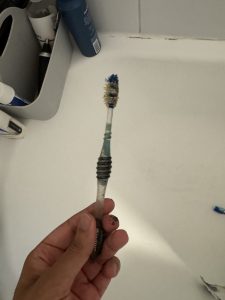
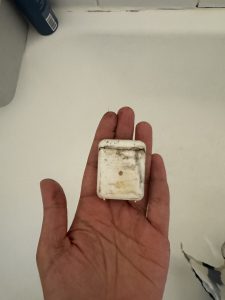
My thoughts floated to:
- Precarious living situations: HMOs, London flat-sharing is known for its high turnover rate.
- Memory: The persistence of personal belongings after someone leaves a space.
- Decay: The visual language through which time becomes visible.
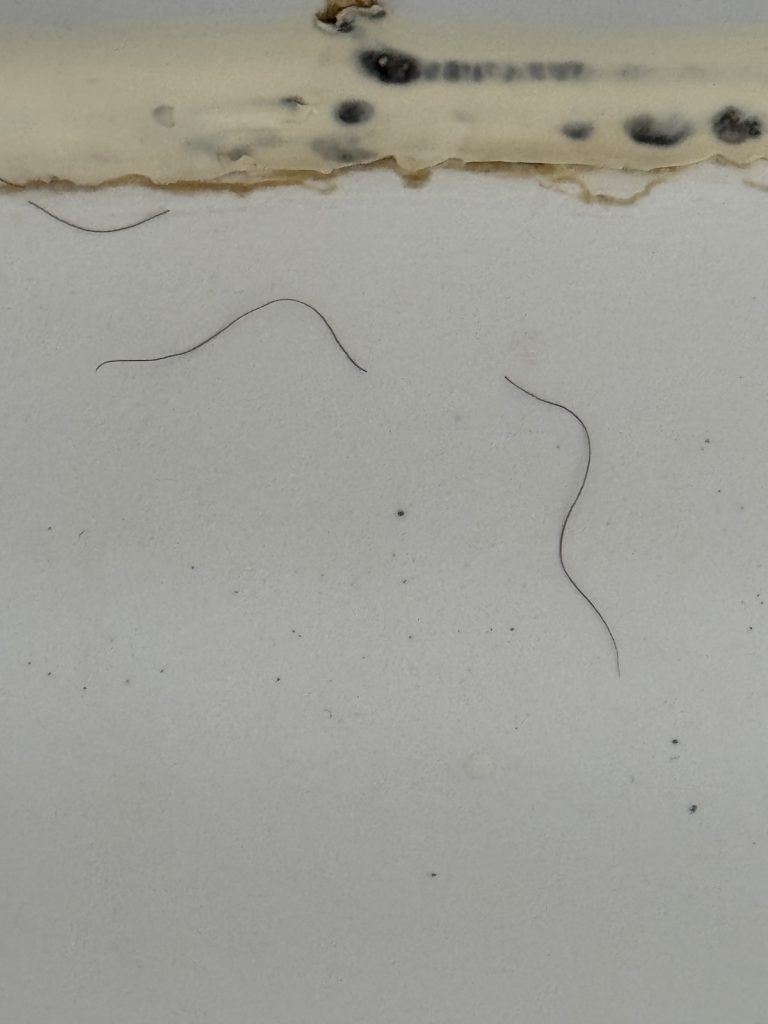
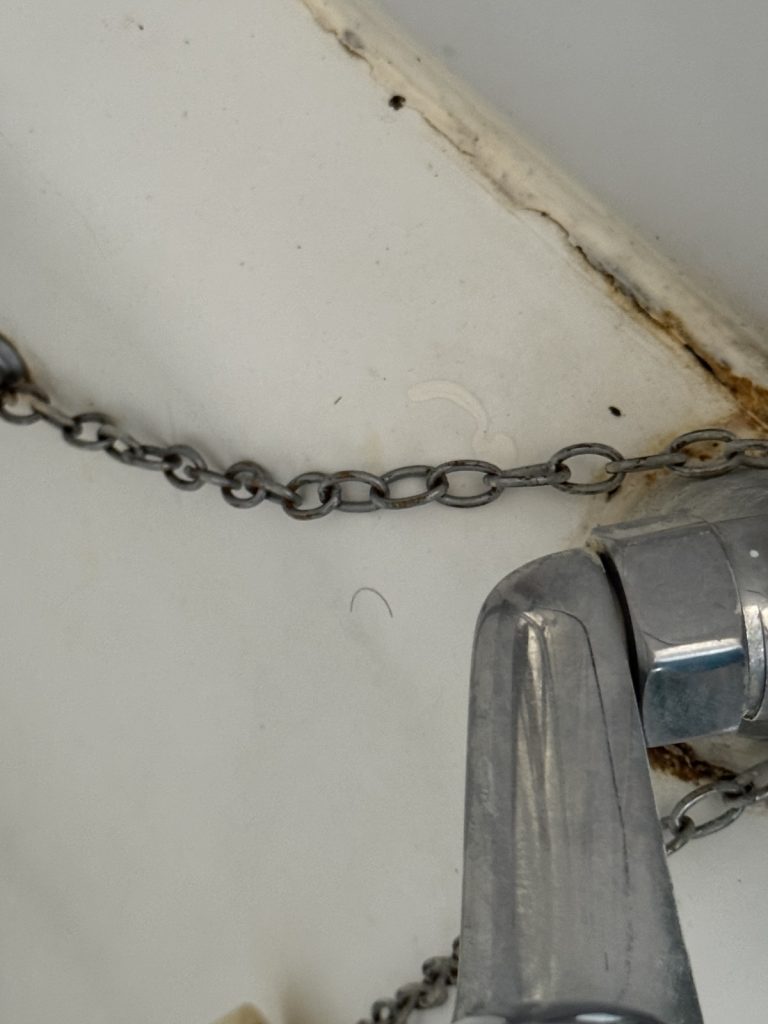
I also photographed areas of mould, hair, and surface deterioration, attending to their locations, colours and patterns.
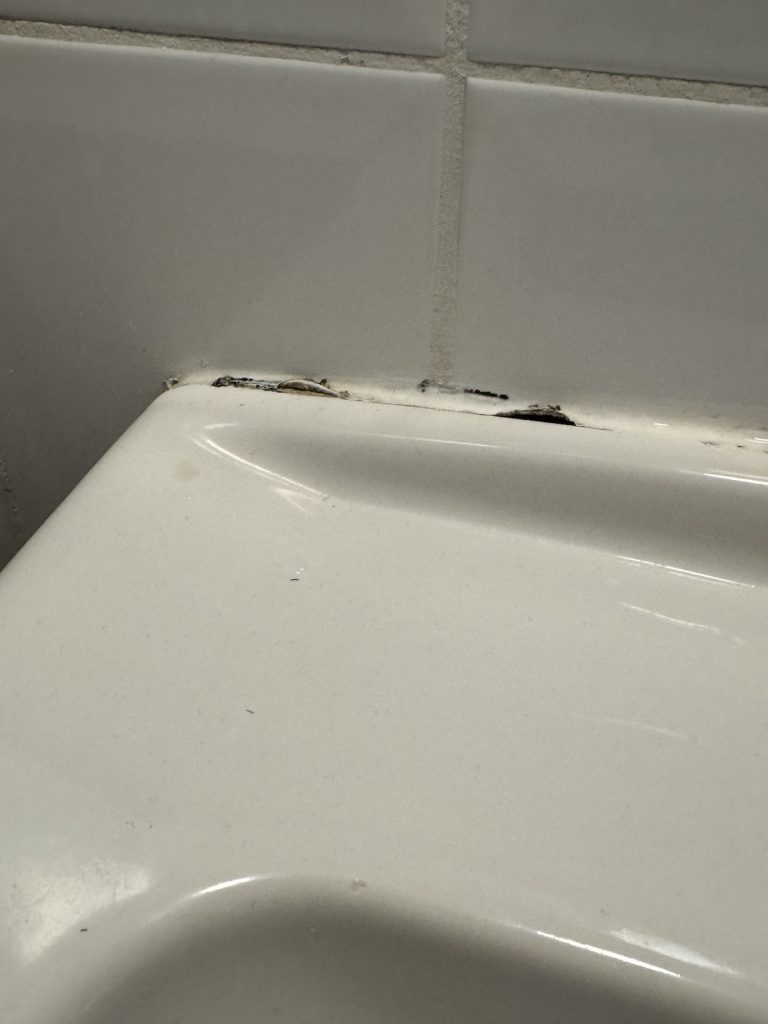
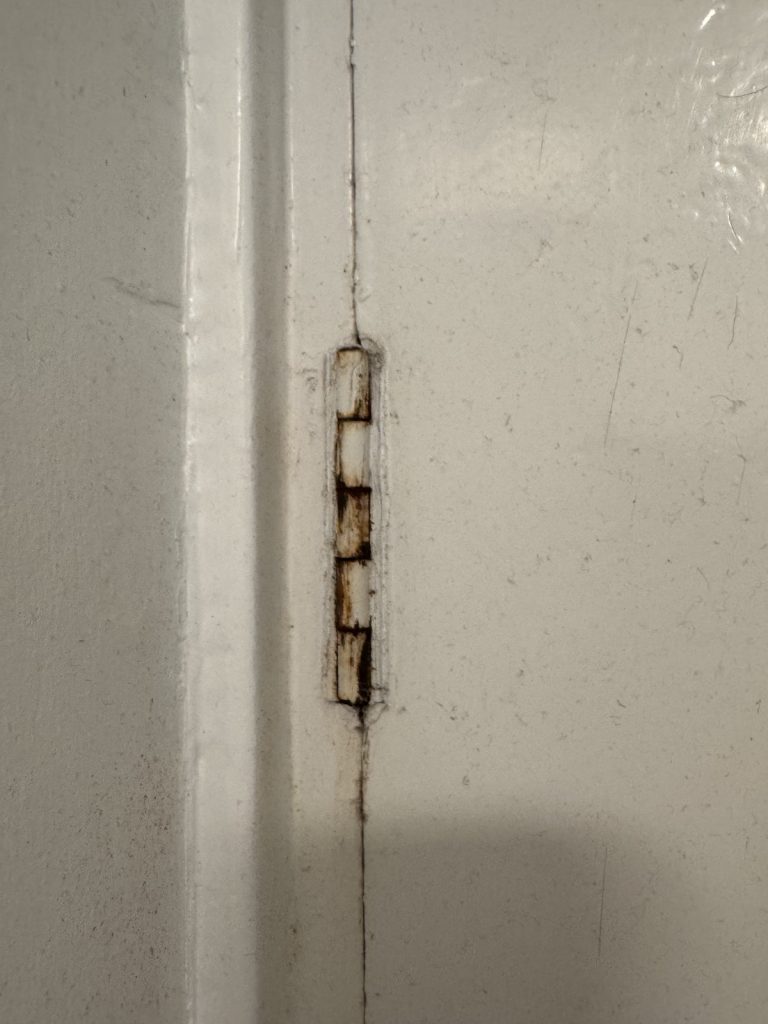
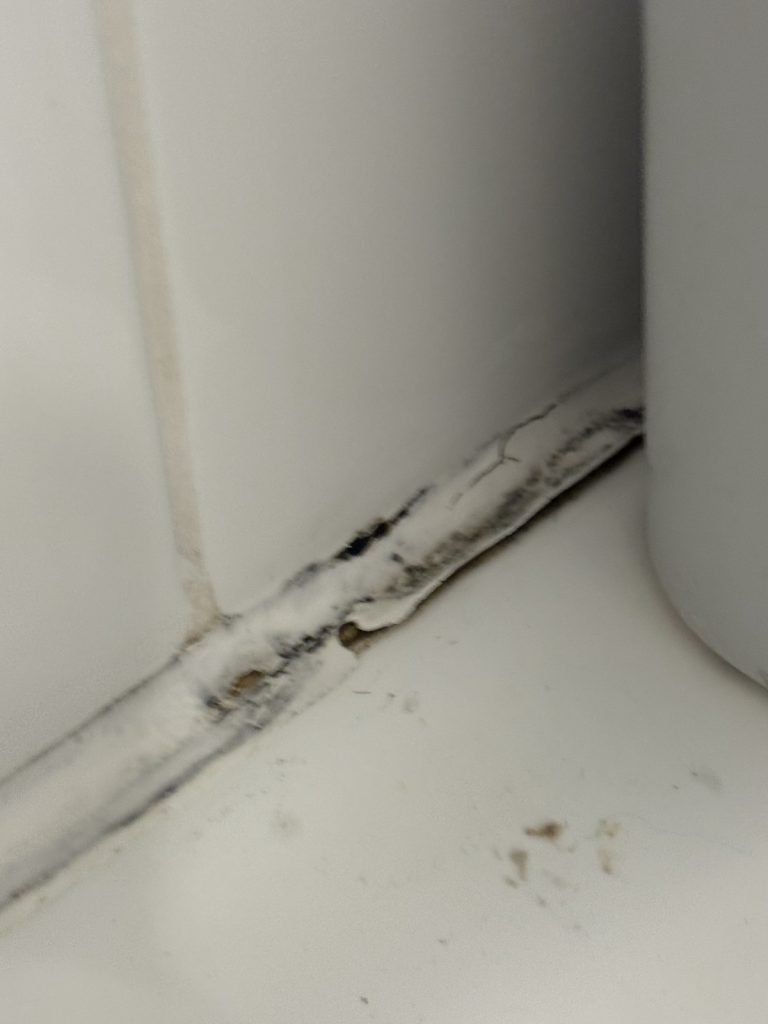
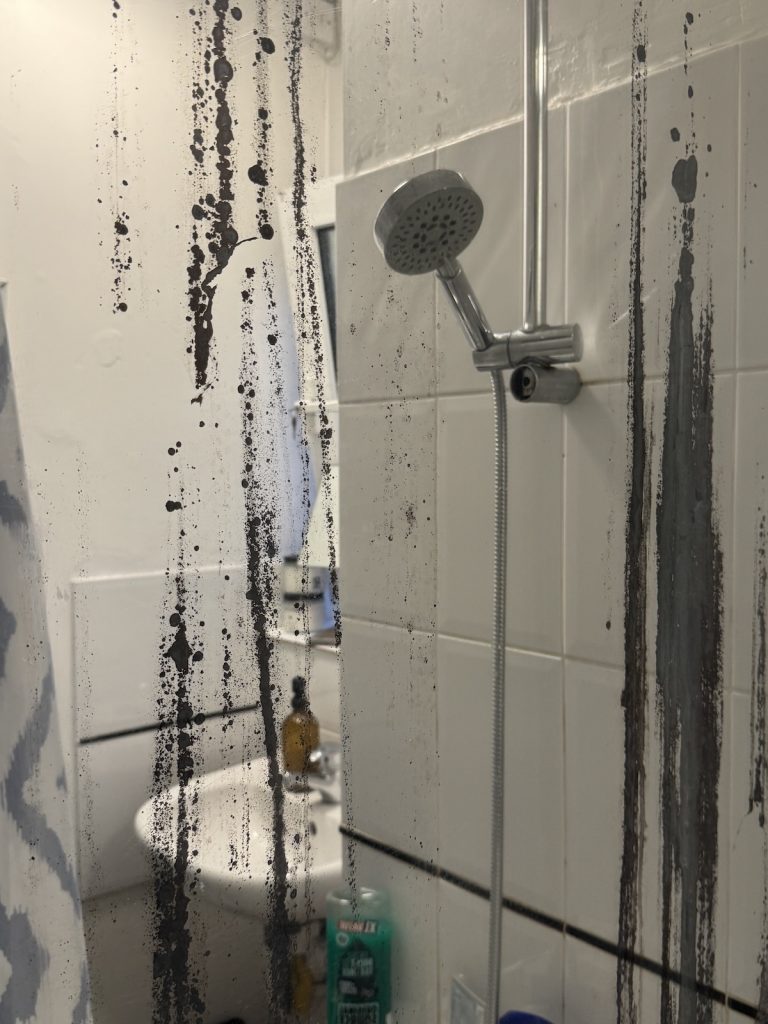
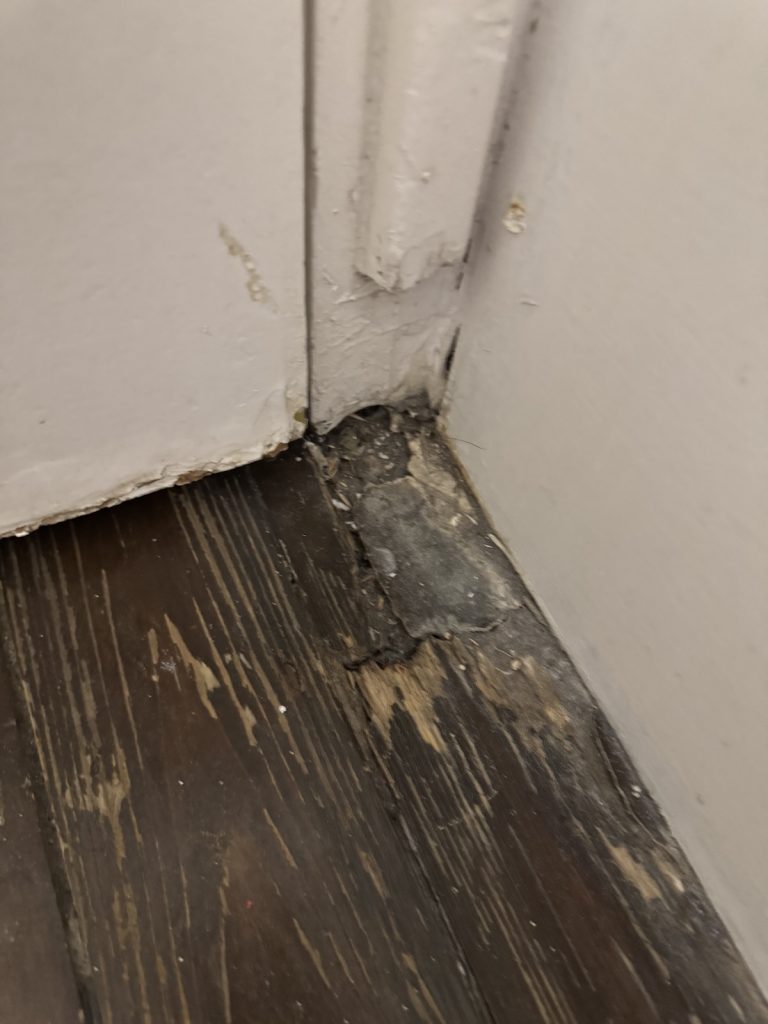
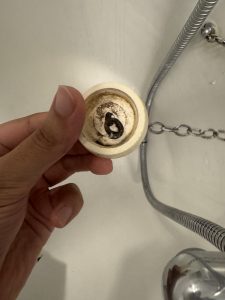
Method 2: Collecting and excavating
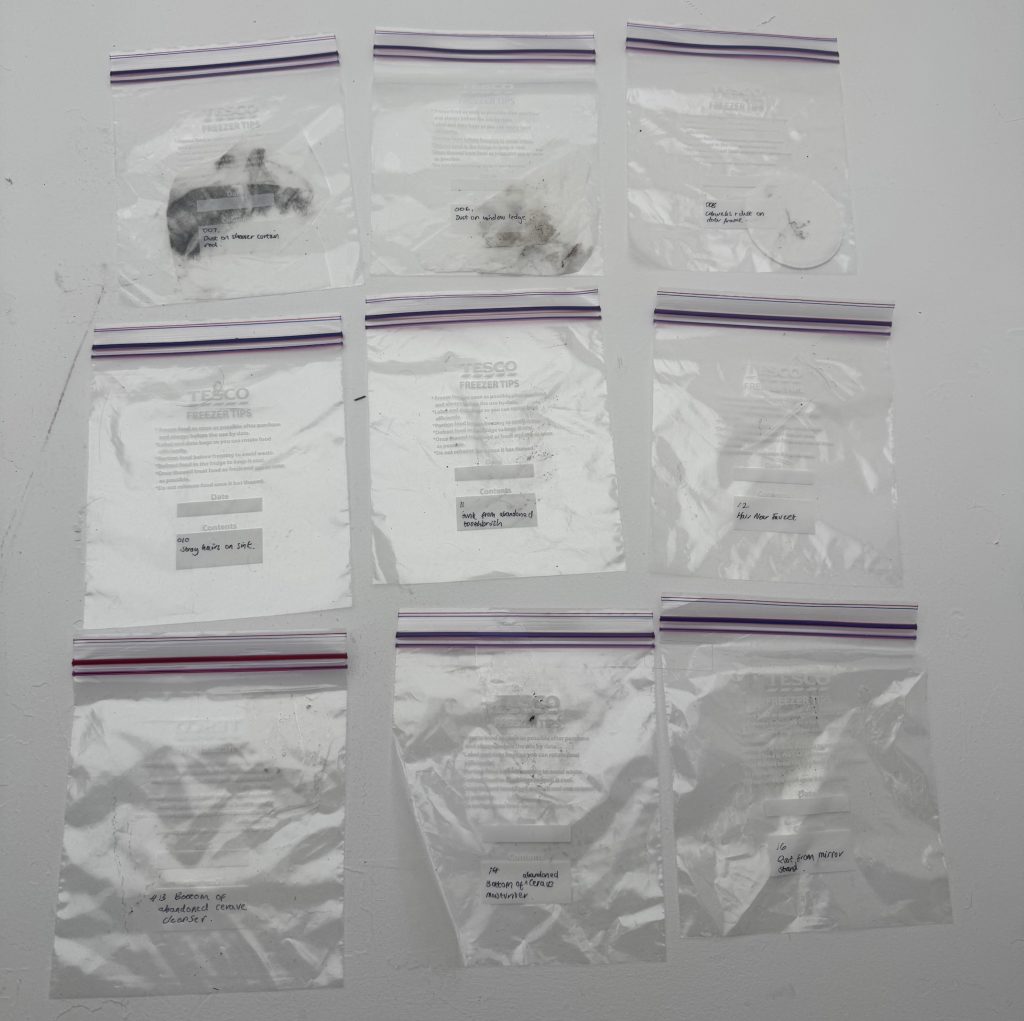
The bathroom’s biological matter, bodily traces, dirt and material residues interested me. I wanted to see what collecting samples might reveal that photography alone could not.
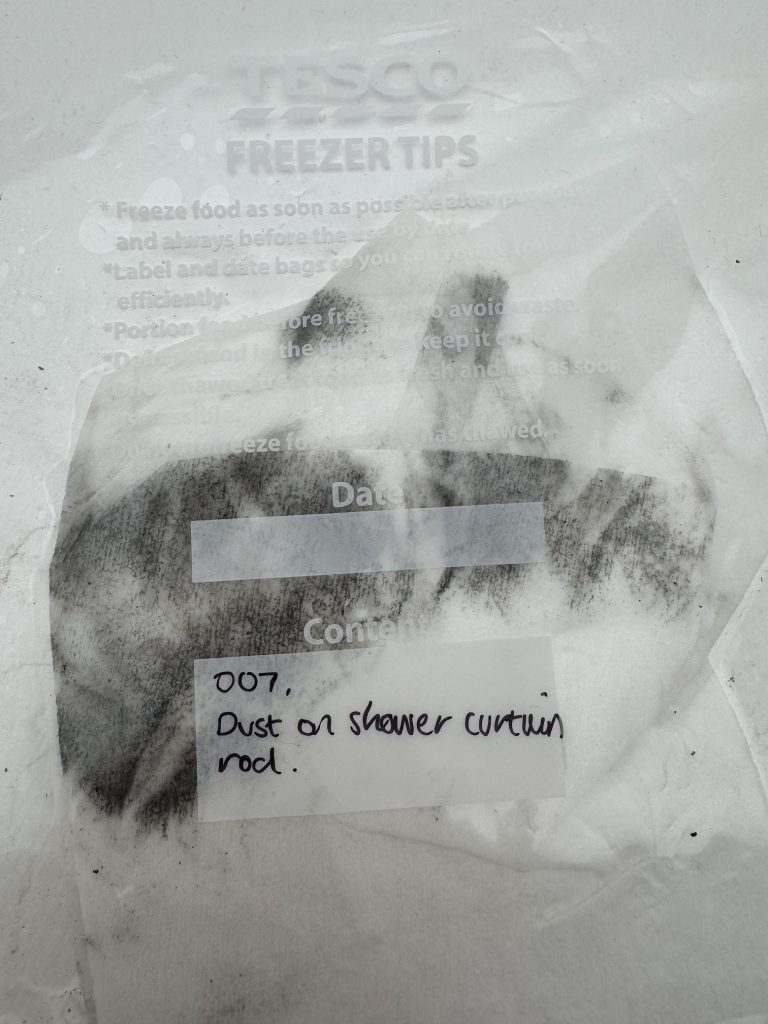
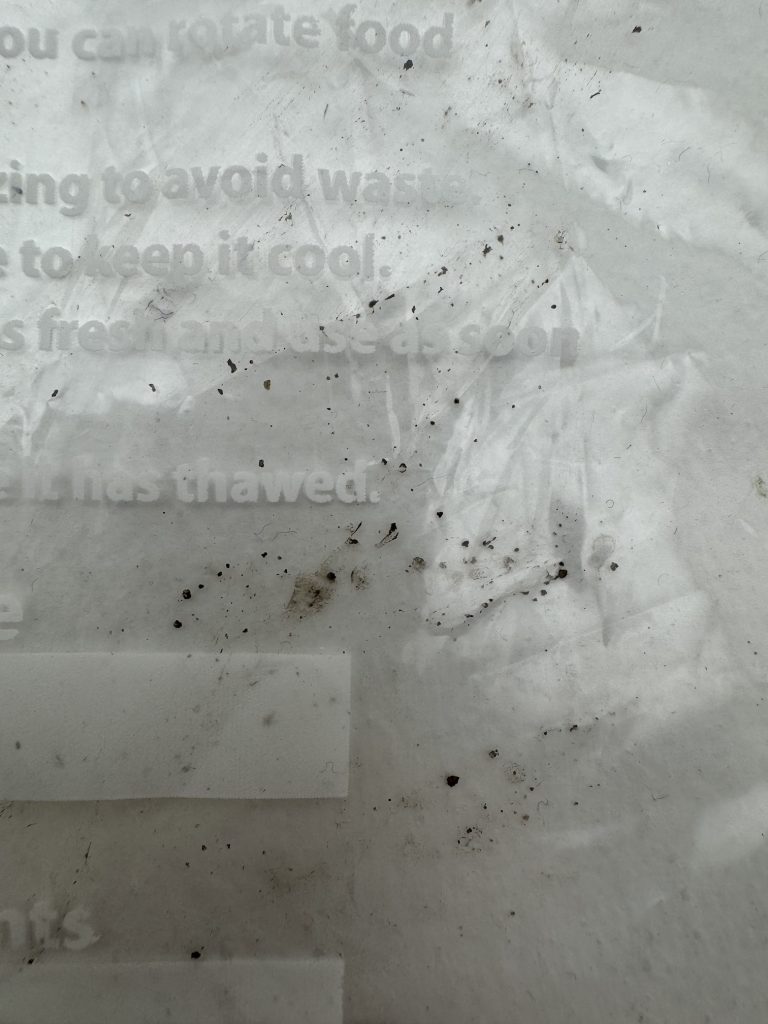
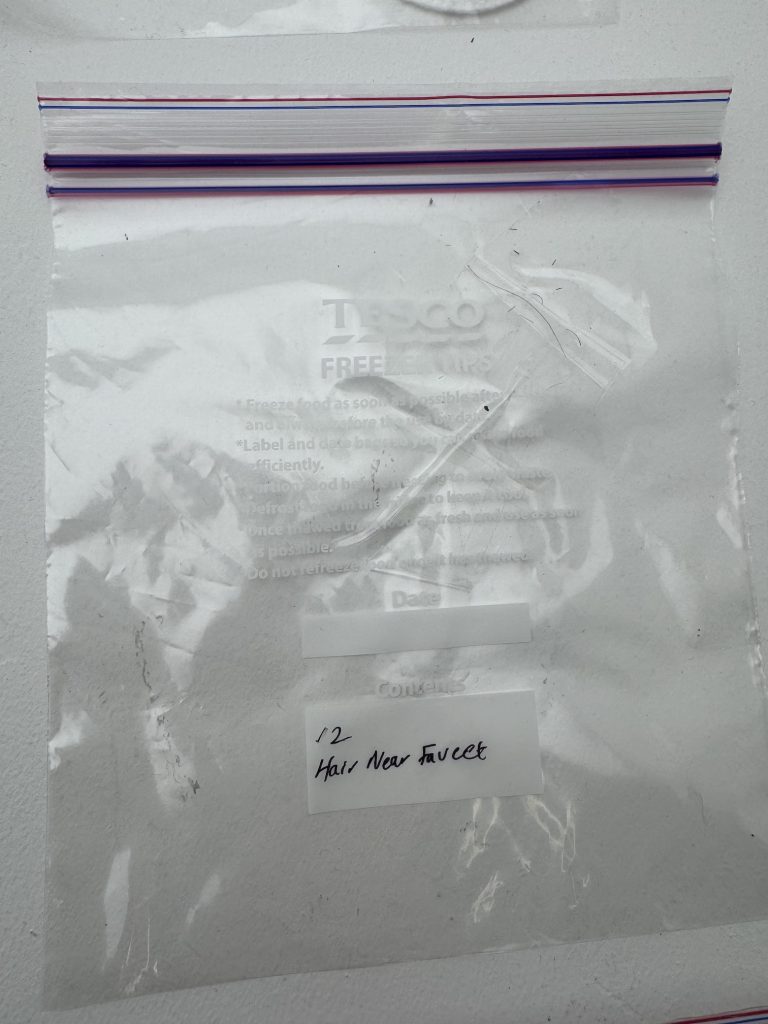
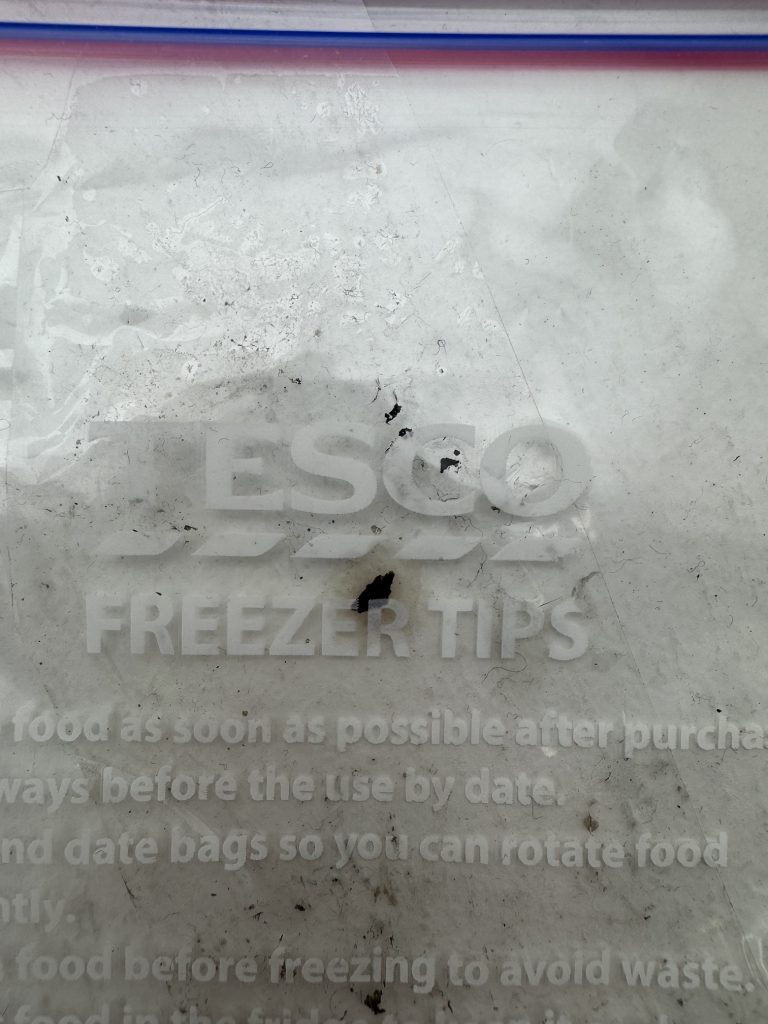
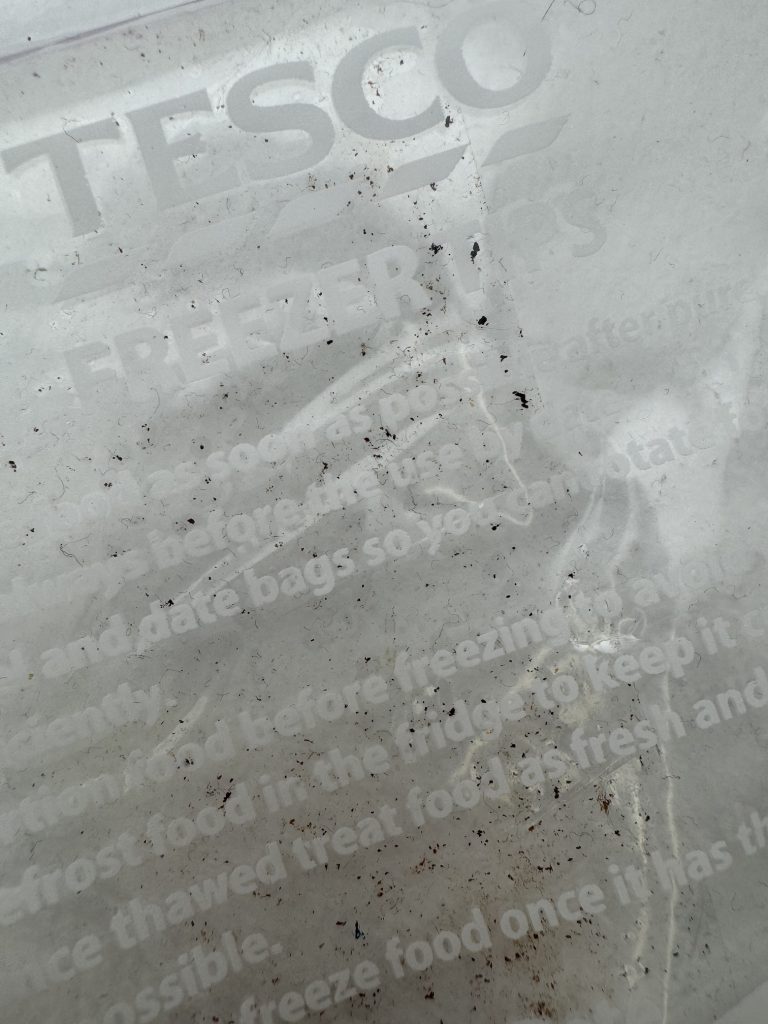
I began by wiping surfaces with cotton pads. I then used wet wipes to explore whether moisture changed what could be lifted from the surface and how it appeared afterwards. Next, I used strips of clear adhesive tape. Their transparency offered a different way of viewing the collected material, without the white backing of the pads and wipes. Finally, I left some strips of tape in place for ten minutes before removing them, to explore whether a longer period of contact produced different results.
I have included photos of selected specimens below:
Method 3 – Sound
I made several recordings, including fourty minutes with the bathroom unoccupied, alongside recordings of everyday activities such as brushing teeth, washing hands and showering.
Questions that arose:
- In what sense can a recording act as testimony to an event?
- How might sound prompt or shape memory?
- As my recordings made inside the bathroom also captured activity outside it, is sound and site something always contaminated and uncontainable?
- Someone using an electric tooth brush can also sound like a drone, or the humming of a train. What happens when meanings for sounds become displaced and scrambled?
- What visual forms might communicate these ambiguities and complexties in sound.
Reflection following my tutorial
After conversations with my tutor, Max Colson, and my tutorial group, we were particularly interested in the photographs (method 1) of the abandoned items. The photographs prompted conversations about memory. We were interested in who these items might have once belonged to, especially if they belonged to flatmates who had previously lived here. We were also interested in the information asymmetries that arise from me being a newcomer to the flat, with my flatmates potentially knowing more about these items and having had sustained relationships with the people who might have owned them. We also discussed the role speculation and speculative writing could play when thinking about these items.
I was encouraged to concentrate more closely on photography and photo manipulation as methods of observation.
Other works:
Mindy Seu describes “the greatest feminist technology” as “the practice of citation” (Seu, 2023). In that spirit, I want to acknowledge the works that have shaped my engagement with this brief. Some were already part of my thinking, and others I sought out as I felt they could meaningfully inform my investigation.
- Cruising Archaeology
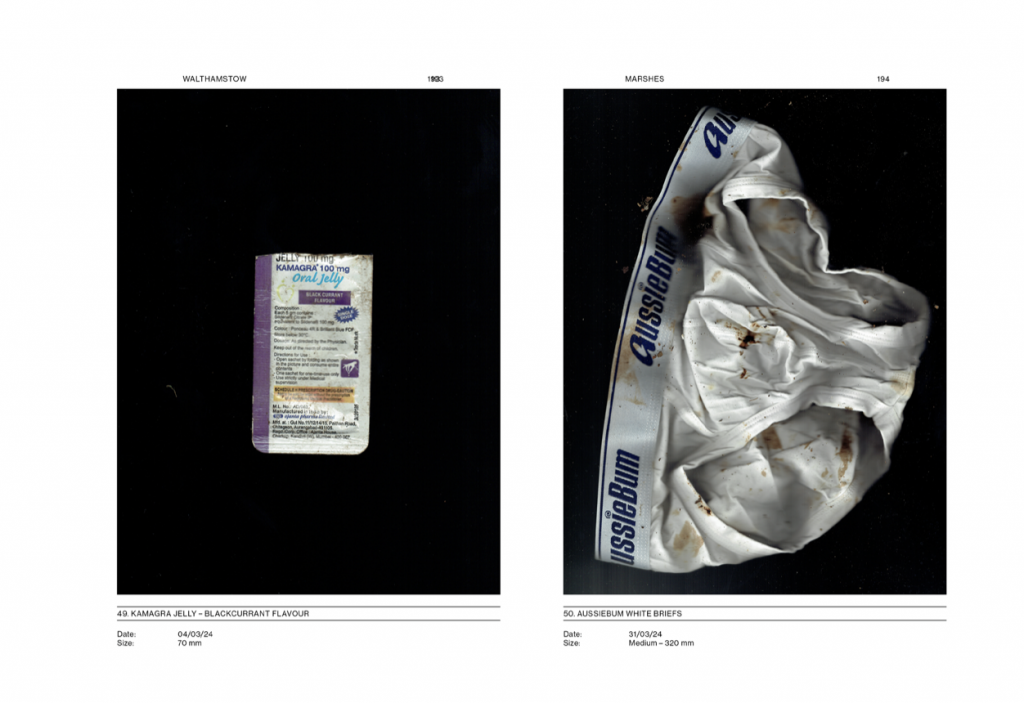
Published by SMUT Press, Cruising Archaeology brings together objects recovered from cruising (public sex) sites in London. It approaches discarded material as evidence of sexual practices and pleasures that often remain outside conventional records (SMUT Press, 2024).
Because my project also engages with objects and artefacts, I am inspired to think about what testimonies and cultural meaning my chosen objects are also imbued with.
- José Esteban Muñoz: Cruising Utopia
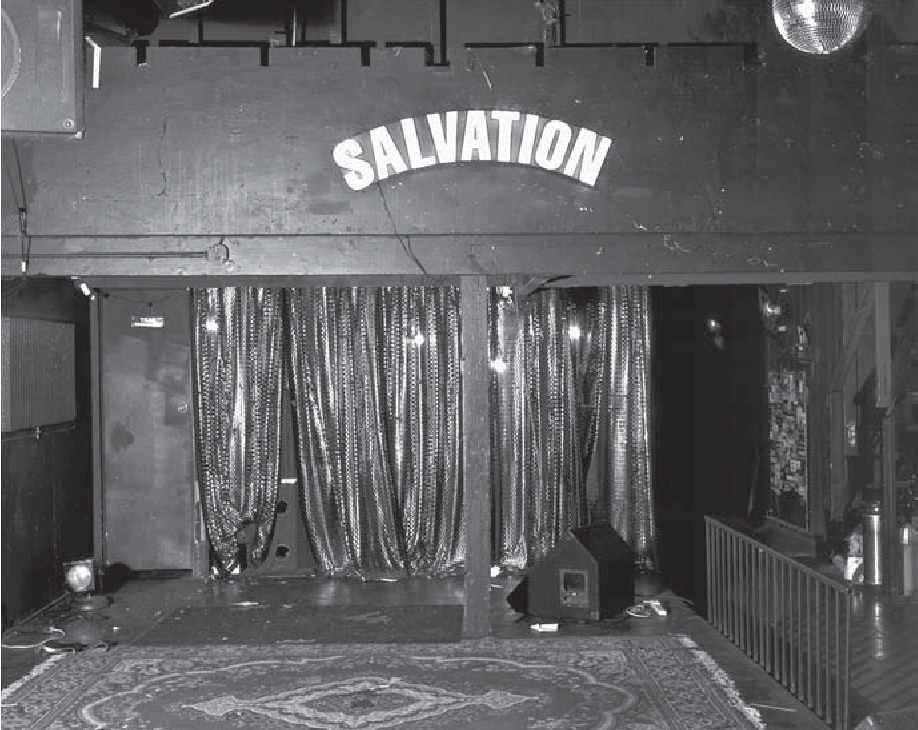
In the chapter ‘Stages, Queers, Punks, and the Utopian Performative’, Muñoz discusses Kevin McCarty’s photographs of stages in queer and punk venues. He writes:.
“The utopian performative charge of this image allows one to see the past, the moment before an actual performance, the moment of potentiality; and the viewer gains access to the affective particularity of that moment of hope and potential transformation that is also the temporality of performance.” (Muñoz, 2009, p. 103)
Engaging with Munoz’ has been central in my thinking on how a still photograph can have a rich temporal dimension. This has pushed me to think of places as non-static, filled with pasts, and potential futurity.
- Avery F. Gordon: Ghostly Matters
In Ghostly Matters, Gordon (2008, p.16) develops haunting as a way of attending to social histories and relations of power that continue to shape the present, even when they are obscured. What is important in Gordon’s work is “ghosts” are a form of epistemology, specifically one that acts a a counter to a contemporary culture that privileges visibility as it’s key forms of knowing.
- Mark Fisher: Ghosts of My Life
Like Gordon, Fischer’s writing also draws on ghosts, but he primarily considers how the present is troubled by futures (alternatives to capitalism) that were once anticipated but have since become difficult to imagine. I am particularly drawn to his account of “melancholia” in the opening chapter, ‘The Slow Cancellation of the Future’. Melancholia can be understood as a refusal to accept the limits of capitalist realism. This interests me because of the importance Fisher gives to affect and its temporal dimension/potential.
- Elizabeth Freeman: Erotohistoriography
In Time Binds, Freeman (2010, pp. 95–96) describes erotohistoriography as a way of encountering history through the body. Touch, sensations and pleasure can be an avenue for historical understanding.
This inspired me to consider what bodily encounters with the bathroom and its objects might contribute to my investigation. What forms of knowing could open up from an embodied relation to the objects.
Steps going forward
- Arrange interviews with my flatmates about the objects, their possible owners, and the memories/relationships associated with them.
- Photograph selected objects outside the bathroom, perhaps in the photography studio on campus, to explore what becomes noticeable when their surroundings change.
- Work at different photographic scales, particularly through closer studies of residue and patterns of deterioration.
- Experiment with photographic manipulation in Photoshop.
- Look at The Atlas Group by Walid Raad, as recommended by Max Colson.
- Engage with the required course reading.
I recognise my strength in placing my practice in conversation with existing research and theory, as alluded to by my litany of references above. Hence, my main personal challenge is to allow the methods of observation, interrogation, iteration and experimentation themselves be my key avenues for knowledge production.
References:
Fisher, M. (2014) Ghosts of my life: Writings on depression, hauntology and lost futures. Winchester: Zero Books.
Freeman, E. (2010) Time binds: Queer temporalities, queer histories. Durham, NC: Duke University Press.
Gordon, A.F. (2008) Ghostly matters: Haunting and the sociological imagination. 2nd edn. Minneapolis: University of Minnesota Press.
Muñoz, J.E. (2009) Cruising utopia: The then and there of queer futurity. New York: New York University Press.
Seu, M. (2023) ‘How to create an anti-canon with Mindy Seu’. Interview with Yana Sosnovskaya. Zora Zine, 8 August. Available at: https://zine.zora.co/mindy-seu-cyberfeminism-index (Accessed: 27 September 2026).
SMUT Press (2024) ‘Cruising archaeology’. Available at: https://smutpress.online/Cruising-Archaeology (Accessed: 27 September 2026).
Leave a Reply